
Laser Dentistry Uses: What It Treats and How It Actually Works
You’ve probably heard the phrase “laser dentistry” at some point and wondered what it actually means. Maybe a friend mentioned it, or you saw it on a practice’s website and kept scrolling. It sounds like something out of a sci-fi film, or at best, a niche tool for one very specific procedure.
It’s neither of those things.
Laser dentistry is a well-established approach that covers a wider range of procedures than most people expect, from cavity fillings to gum treatment to certain bone work. And the experience of sitting in the chair for a laser procedure is genuinely different from what most patients have come to expect from a dental visit.
This article answers both questions in the title. What is laser dentistry used for? And how does a laser actually work in a dental setting? Plain language, no jargon, no sales pitch.
What you’ll learn in this guide:
- How a dental laser works and what makes it different from a drill
- What laser dentistry is used for on teeth and bone
- How lasers treat gum tissue and soft tissue conditions
- What a laser appointment actually feels like
- Who tends to benefit most from needle-free laser care
How a Dental Laser Actually Works
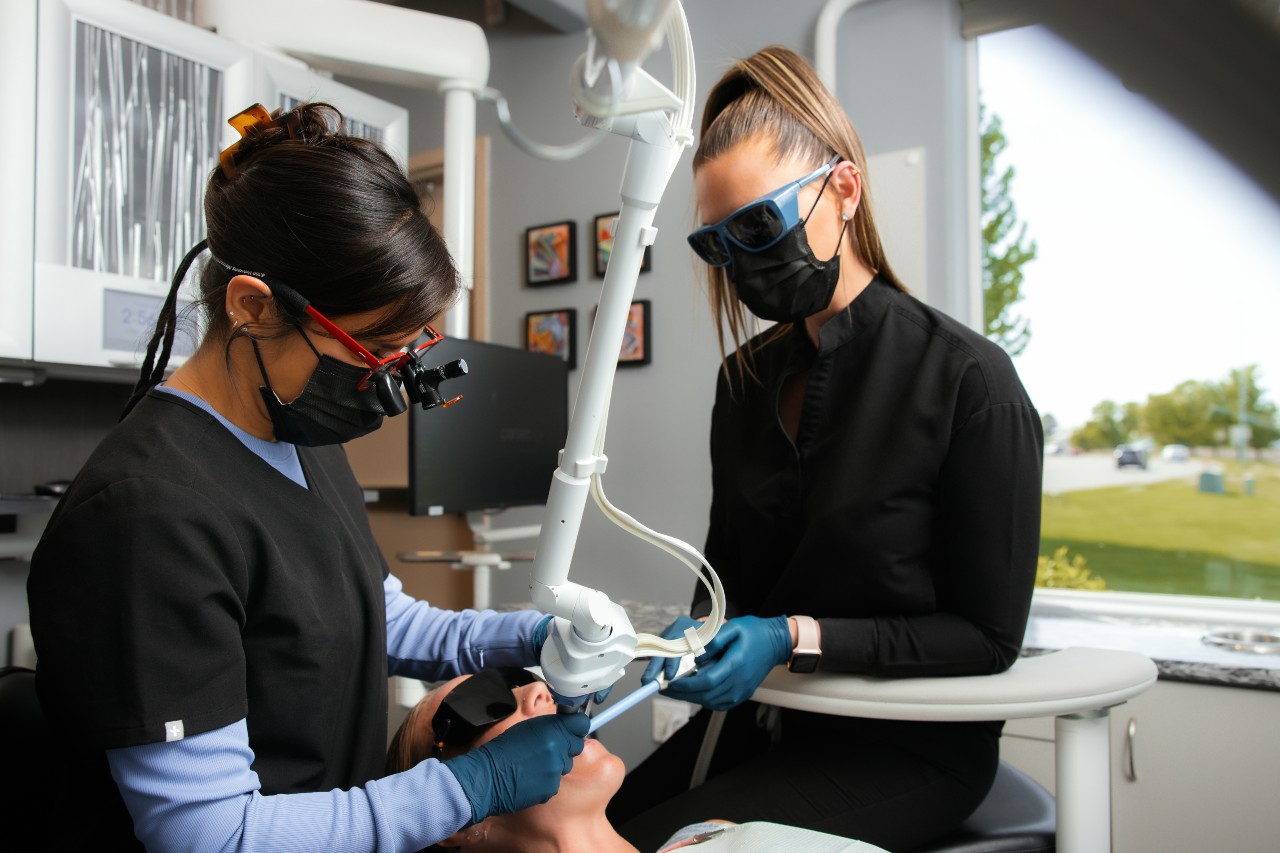
A dental laser uses a concentrated beam of light energy to remove, reshape, or treat tissue in the mouth. That’s the core mechanic. Where a traditional drill works through friction, vibration, and physical pressure against the tooth, a laser works differently. It targets tissue with precision, vaporizes what needs to go, and leaves the surrounding area largely undisturbed.
The difference from a drill
The drill is a mechanical tool. It spins against the tooth, generating heat and vibration, which is why so many people find it uncomfortable and why numbing is almost always part of the process. The laser doesn’t grind. It doesn’t vibrate. It removes tissue by delivering focused light energy to a very specific area, which means less collateral disruption to the healthy tooth structure around it.
What makes the Solea different
Not all dental lasers work on both teeth and gum tissue. The Solea laser, which Viewpoint Dentistry uses, operates at a CO2 wavelength of 9.3 microns. That specific wavelength interacts with both hard tissue (enamel and dentin, the layers of your tooth) and soft tissue (your gums), which is what makes it an all-tissue laser. Most dental lasers are designed for one or the other. That said, not every procedure is laser-eligible. Cavity size, location, and other clinical factors all affect whether the laser is the right tool for a given situation.
Laser Dentistry Uses on Teeth and Bone
Cavity preparation is the laser dentistry use most patients recognize first. The laser removes decayed tissue from the tooth precisely, without the drill noise, vibration, or heat that make traditional fillings uncomfortable for so many people.
Fillings without a needle
Because the laser works without the friction and pressure that make numbing necessary, most cavity preparations with the Solea don’t require an anesthetic injection. No needle, no shot, no numb lip on the drive home. You leave the appointment able to eat, talk, and go about your day without waiting for the anesthetic to wear off. That’s not a minor convenience for most patients. For people who’ve been putting off a filling for months because of the shot, it changes the calculation entirely.
Bone procedures
The Solea is also FDA-cleared for bone procedures, including cutting, shaving, recontouring, and resection. This expands the range of what laser dentistry can address beyond the tooth itself. One honest limit worth knowing: the Solea is not suitable for deep extractions or root canals. Those procedures require different tools, and a good dentist will tell you that directly rather than overpromising what the laser can do.
Laser Dentistry Uses on Gum Tissue

Laser dentistry isn’t only about teeth. The same technology that prepares a cavity can also treat gum tissue with a level of precision that a scalpel can’t match.
What soft tissue laser procedures cover
In laser dentistry broadly, the Solea is used for gum contouring and reshaping, treatment of gum disease (periodontal therapy), frenectomy (tongue-tie correction), removal of soft tissue lesions, and canker sore treatment. The range is wider than most patients expect when they first hear “laser dentistry.”
Why soft tissue laser procedures feel different
Soft tissue laser procedures are typically blood-free and suture-free. The laser targets only what needs to go, leaving the surrounding tissue largely undisturbed. Less trauma to the area means a quieter recovery than traditional surgical approaches, where a scalpel cuts through healthy tissue to reach the target. Not every soft tissue condition is laser-appropriate, and Dr. Snow evaluates each patient’s situation individually to recommend the right approach.
What a Laser Appointment Actually Feels Like
If you’re still picturing the drill, this is the section worth reading carefully.
What you won’t notice
For most procedures, there’s no needle. No injection, no waiting for numbness to set in, no lingering numbness when you leave. There’s no drill sound. No vibration. The absence of those things is something patients consistently remark on, especially people who’ve spent years bracing for the shot before anything else happens.
What you will notice
Some patients feel a mild warmth or light pressure during the procedure. Individual experience varies based on tooth sensitivity, cavity depth, and anatomy, so it’s not accurate to promise zero sensation. What it isn’t is the sharp sting of a needle or the grinding discomfort of a drill. The Solea is the only laser of its kind in Richland, which means if you’ve been searching for a genuinely different dental experience in the Tri-Cities, Viewpoint is where it’s available.
Who Benefits Most from Laser Dentistry

Laser dentistry isn’t the right fit for every patient or every procedure, but a few groups tend to find it particularly valuable.
Patients with dental anxiety or a specific fear of needles often find that removing the injection changes the entire experience. People who’ve been avoiding the dentist for years because of past experiences with shots and numbing have a real alternative here. There’s no judgment about the gap. There’s just a better option waiting.
If you need to get back to work, pick up kids, or function normally right after your appointment, skipping the anesthetic means skipping the aftermath. And for anyone who simply wants a more comfortable, less stressful dental visit, the laser delivers that for many common procedures.
Dr. Snow evaluates each patient and each procedure individually. If the laser isn’t the right fit for a particular case, she’ll say so and explain why. That’s how care at Viewpoint works.
Ready to Find Out If Laser Dentistry Is Right for You?
Laser dentistry covers more ground than most people realize, and the experience of a laser appointment is genuinely different from what many patients have come to expect. Knowing that is one thing. Sitting in the chair and noticing the absence of a needle is another.
Viewpoint Dentistry is a comprehensive dental practice in Richland, WA, led by Dr. Suzy Snow, a graduate of one of the most respected advanced dental training programs in the country. Viewpoint’s approach connects oral health to your overall wellness, and the Solea laser is one part of that picture.
If you’re curious whether laser dentistry is right for your next procedure, schedule a visit with our team in Richland. We’re happy to walk you through what to expect before anything happens.
